A Late-Autumn Garden Visit, Looking for Structure
A late-autumn garden visit reveals which stems, seed heads and lasting forms give a garden presence after summer colour fades, helping you plan what to preserve.
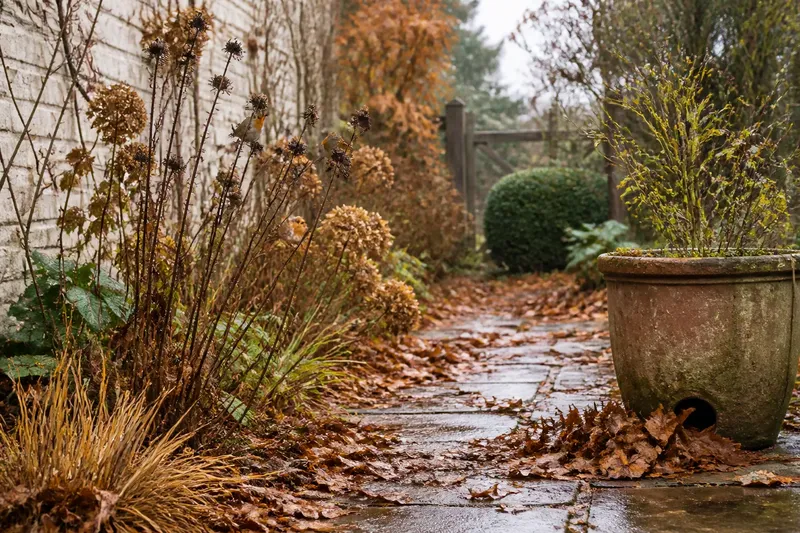
The common mistake on a late-autumn garden visit is to search for summer colour; the cost is overlooking the stems, seed heads and textures that make the garden worth looking at now. Take a familiar route and notice how wind, rain and fallen leaves change the scene, rather than judging it by what has disappeared.
A notebook or phone camera can help you remember a particular view, but there is no need to name every plant. Pay attention to what the season has left behind: dry husks, curled leaves, seed scattered beneath a plant, or birds moving through the border.
Late-autumn garden visit
Start at the entrance or another familiar spot, then walk slowly towards the beds. Look for changes in texture and activity: a patch of bare earth where leaves have shifted, a seed head picked over by birds, or damp leaves gathered along a path.
Light and weather alter what you notice. After rain, dark stems may show up clearly against a pale wall; on a breezy day, dry grasses rustle and loose leaves collect in corners. A quick note about the conditions will help you remember why the garden looked or sounded a certain way.
- If leaves collect over a plant’s base: check whether they are smothering low growth; if they are, move them gently to a clear patch nearby, and if not, leave them as part of the seasonal layer.
- If seed heads are being visited by birds: note which plants attract activity; if you want to retain that food source, leave suitable heads in place, and if access or tidiness takes priority, remove only what is needed.
- If stems lie across a path: check whether people can pass safely; if they cannot, clear the obstruction, and if they can, record the arch as part of the garden’s winter character.
- If bare soil is exposed after leaves move: check whether the area is vulnerable to being trodden or washed away; if it is, keep foot traffic off it, and if not, observe how it changes through the season.
- If a plant looks damaged or diseased: check its label and consult reliable local gardening guidance; if the cause is unclear, ask a qualified horticultural professional before cutting it back, and if it appears healthy, simply note its seasonal form.
- If the garden seems unusually quiet: pause near a hedge or sheltered bed and listen; if you hear birds or rustling, note where the activity is, and if you do not, return at another time before drawing a conclusion.
Signs of seasonal activity
Late autumn is not only a change in appearance. Look for signs of what is happening: birds feeding, insects sheltering in dry plant material, or leaves gathering in the lee of a wall. These observations help distinguish a garden that is merely untidy from one where seasonal processes are visible.
Plant identity can matter if you are deciding what to cut or leave. Check a plant label, a trusted local gardening source or a knowledgeable horticultural professional rather than guessing from a dried stem; plants that look alike can have different care needs.
Courtyards and small gardens
In a courtyard, balcony or small garden, everyday traces can be easier to notice than broad changes across a border. Look for water marks on paving, leaves caught behind a pot, or a small cluster of seeds beneath a container. These details show how wind and rain move through a confined space.
Imagine a courtyard gardener finds wet leaves packed against the drainage opening of a pot after a windy afternoon. They move the leaves aside, check that water can escape, and note where the leaves tend to collect; the expected result is a clear outlet and a more useful record of the courtyard’s wind pattern.
In a larger garden, the equivalent clues may be spread across a hedge, lawn edge or sheltered corner. A short walk from the house to the far boundary can reveal where leaves settle and where birds spend time.
What should you look for?
Should I leave seed heads in place?
There is no single rule for every plant or garden. Consider whether the heads are attracting birds, obstructing access or showing signs of a problem, then check reliable plant-specific guidance before making a care decision.
How can I tell what birds are eating?
Watch from a quiet spot and note which plants birds visit and whether they pick at seeds or search among stems. If you need to identify a plant or assess its value to wildlife, use a trusted local source or ask a knowledgeable professional.
What should I do with fallen leaves?
Check whether leaves are blocking drains, covering low plants or collecting on a path. Move them where they cause a practical problem; elsewhere, observe how they settle before deciding whether they need attention.
How do I record seasonal changes?
Write down the date, weather and one specific observation, such as “leaves gathered beside the north wall”. A phone photo taken from the same place on a later visit can help you compare what has changed.
From noticing to deciding
After your walk, keep observations separate from jobs. A note such as “birds feeding on the dry heads beside the shed” records what happened; it does not require an immediate decision about cutting the plants.
For a fully worked example, imagine a gardener finds leaves covering a low evergreen beside the front path after rain. They note the wet weather, lift the leaves gently to check whether the plant is buried, and discover that only the outer tips are covered while the path remains clear. They move the loose leaves to an open patch nearby and write down where they collected; the result is an uncovered plant, leaves left elsewhere in the garden, and a clear observation to check on the next visit.
A late-autumn garden visit is useful even when it produces no task. Write down one detail you would otherwise forget, then revisit it in different weather; that small record can show whether a seasonal change is passing, recurring or worth asking an expert about.