Gravel, Brick or Stepping Stones: What a Garden Path Changes
Compare gravel, brick and stepping stones to choose a garden path that guides movement, frames planting and suits the character of your outdoor space.
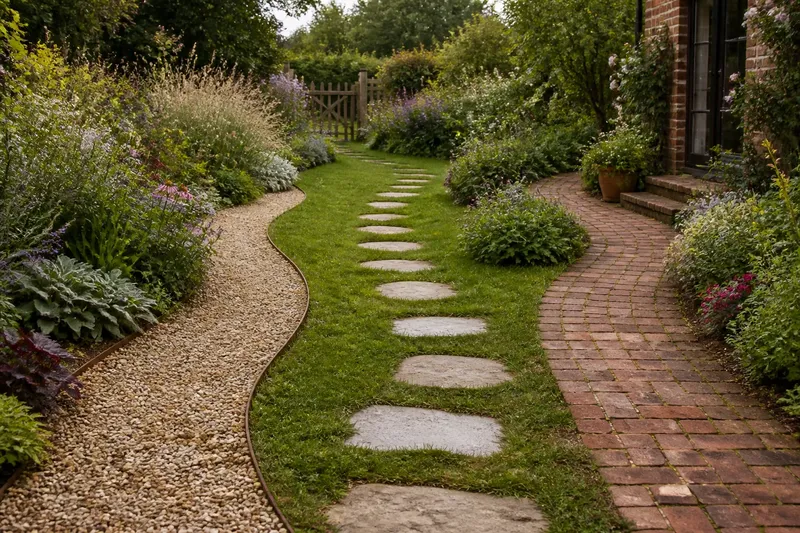
The common mistake with a garden path is choosing its surface as if it were only a route from one place to another. A path changes how quickly you move, what you notice beside it and whether planting feels close, orderly or loose. Gravel, brick and stepping stones each give the same garden a different character.
Gravel path character
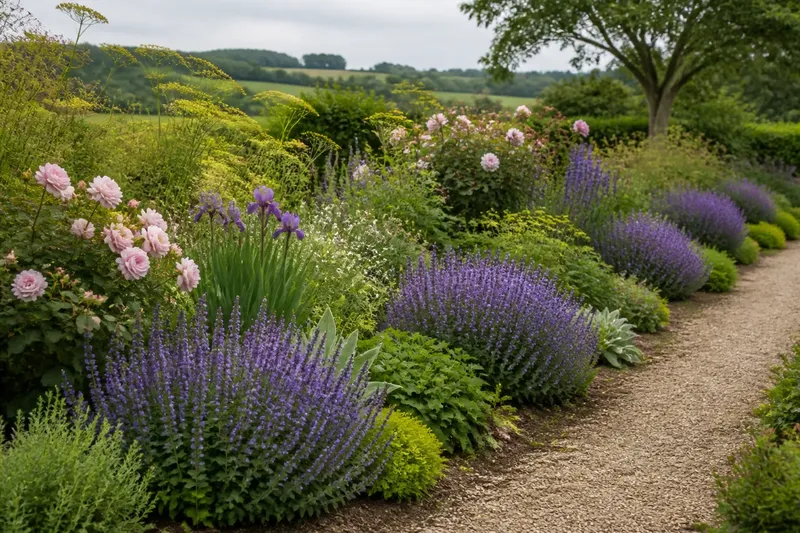
Gravel makes a path feel informal and open, with a loose edge that sits comfortably beside naturalistic planting. Its small pieces echo the texture of soil, seed heads and foliage, so a gravel route can feel less like a strip laid across the garden and more like a clearing through it.
It also gives movement a distinct sound underfoot. That gentle crunch can make a short walk feel noticed rather than merely functional, though loose footing may be inconvenient for wheels, narrow heels or anyone who finds it difficult to balance. A firm, well-contained base and a clear edge help the path stay legible beside spreading plants.
Gravel suits curves and informal routes particularly well, but it needs a boundary that fits the garden. Brick edging, metal edging or a neat cut in the soil can keep it from drifting into a border. Pale gravel brightens a shaded corner, while darker stone tends to sit quietly against green foliage. Consider nearby paving, walls and planting when choosing a colour.
Brick path character
Brick gives a path a deliberate, settled appearance. Its repeated joints create a visible line through the garden, and its warm, earthy colour can link a house, terrace or old garden wall with nearby planting. Unlike loose gravel, brick reads as a continuous surface, so it can make a route feel composed even when leaves soften its edges.
The laying pattern affects the impression. A straight running bond feels calm and directional; a herringbone pattern adds a busier, more formal texture. Reclaimed bricks may bring variation in shade and surface, while newer units can look more even. Ask whether the garden needs a quiet link or a stronger architectural line.
Brick can make the boundary between path and border more pronounced. That clarity is useful beside clipped planting or a narrow bed, but may feel stern alongside loose, billowing grasses. Let plants soften the edge where a gentler transition matters, while keeping enough clear space for comfortable passage.
Stepping stone paths
Stepping stones turn walking into a sequence of small decisions. Instead of following one continuous strip, you move from stone to stone, often slowing to place each step. This can make a route through a lawn or low planting feel like a short journey, drawing attention to what sits beside or between the stones.
The gaps are part of the design, not leftover space. Grass between stones gives a soft, integrated look; gravel or low groundcover creates a more textured seam. Wide gaps may feel awkward to some walkers, while stones placed too close together can lose the light stepping rhythm that makes the surface distinctive.
Stepping stones are useful when a full-width path would visually divide a small lawn or border. They preserve more of the planting’s continuity, but the route needs to be easy to read. A clear view of the destination and stones that stand out from their surroundings make the invitation to walk more natural.
Planting beside paths
Gravel tends to blend with planting because both have varied, fine-grained textures. It works well beside loose mixes of perennials, ornamental grasses and self-seeding flowers, where a crisp paving edge might interrupt the garden’s relaxed character. Keep plants from leaning too far across the route if it needs to remain comfortable to use.
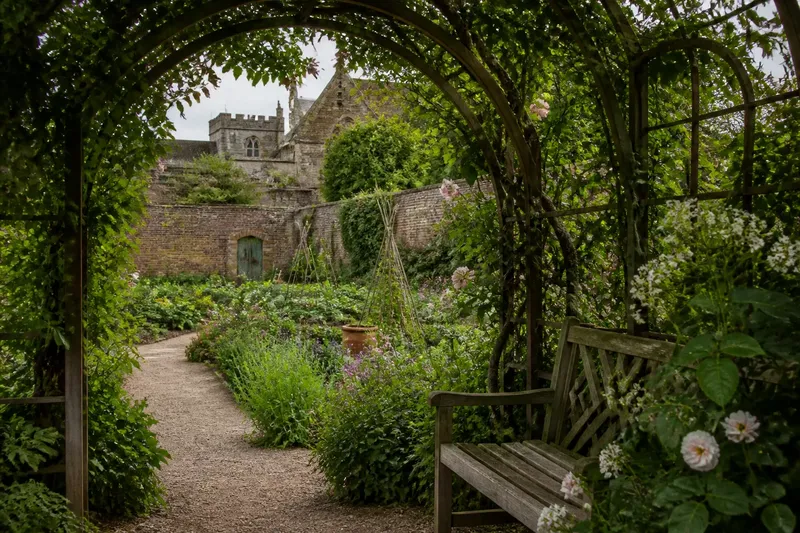
Brick creates a stronger contrast with foliage, especially when its joints and edges are clearly visible. That can give a mixed border a grounded frame and help a narrow garden feel more organised. Beside delicate or informal planting, weathered brick or a planting-softened edge may feel more at ease than a sharply defined new surface.
Stepping stones let planting pass between the walking surface. Low thyme, moss or lawn can make the stones feel embedded, while taller plants placed near the route can create a sense of passage through a border. Keep enough contrast around each stone for visitors to see where the route goes.
Paths and sightlines
A continuous gravel or brick path usually points the eye along its length. A gentle curve can reveal a destination gradually, while a straight line makes the endpoint feel immediate. Gravel’s softer edges make a curve seem natural; brick’s joints reinforce the route’s direction.
Stepping stones break that line into separate marks. They can make a garden seem broader because lawn or planting remains visible around them, but they can also make a route feel less direct. Place the final stone so the arrival point is obvious, especially where the path meets a gate, bench or terrace.
Surface width matters as much as material. A broad path can feel generous and lead the eye with confidence; a narrow one can read as a discreet invitation. Let the route’s visual weight suit what it connects, rather than making every path equally prominent.
Everyday path care
Each material asks for a different kind of attention. Gravel may need raking where it shifts, brick joints may collect weeds or debris, and grass or groundcover may obscure the edges of stepping stones. Nearby trees, foot traffic and the garden’s maintenance habits all affect which surface is comfortable to live with.
Think about how the path is used in ordinary weather, not only how it looks on a dry afternoon. A route to a shed may need a more continuous, stable surface than a decorative crossing through a lawn. If mobility, drainage or surface stability is a concern, check product guidance and seek suitable professional advice where needed.
Testing the route
Say you have a small lawn between the back door and a sunny border, and visitors need to cross without a broad paved strip dividing the grass. You place flat stepping stones in a visible line from the door to the border, leaving grass between them, then view the route from the doorway and walk it at an ordinary pace. If each stone is easy to pick out and a visitor can follow the line to the border without pausing to search for the next foothold, the crossing is legible; if stones disappear against the lawn or the next step is unclear, bring them closer together or choose a continuous gravel path instead.
- Check whether loose gravel shifts underfoot; if it moves enough to make walking feel uncertain, choose a firmer contained surface or another material.
- Check whether the route needs to carry wheels; if loose stones impede them, choose a suitable continuous surface instead.
- Check whether brick’s strong joints suit the planting; if they make a relaxed border feel too sharply divided, soften the edge with planting or consider gravel.
- Check whether the path should guide the eye directly to a gate or bench; if the endpoint is hard to read, use a clearer continuous line or adjust the route.
- Check whether stepping stones stand out from the lawn; if their outlines disappear, change their contrast or use a continuous path.
- Check whether plants will spread across the walking area; if they obscure the route, keep the edges clear or choose a surface that remains easy to follow.
Garden path questions?
Is gravel comfortable for everyday access?
It can suit relaxed garden routes, but loose pieces may feel uncertain under some footwear or wheels. Consider who uses the path and whether its base can be made sufficiently firm for those needs.
Does brick make a garden look formal?
Brick often gives a path a more defined, architectural presence, but the laying pattern, colour and edge planting affect the result. Weathered units and generous planting can make it feel less formal than a crisp, tightly edged strip.
How far apart should stepping stones sit?
Space them so the route feels natural to walk, rather than treating a fixed spacing as right for every garden. Consider the intended users, the destination and the way the stones read from the approach.
Can one garden use more than one surface?
Yes, if each surface has a clear purpose and the transition feels intentional. For instance, a brick terrace might lead to a gravel garden path, while stepping stones continue across a lawn; keep the change visible and comfortable underfoot.
Choosing a garden path
Choose gravel if you want a loose, textured route that sits naturally beside informal planting. Choose brick if you want a clear, grounded line with a stronger architectural character. Choose stepping stones if preserving the sight of lawn or planting matters and a slower, more deliberate crossing suits the space.
Before settling on a garden path, stand at its starting point and look towards where it should lead. Notice whether you want the surface to guide the eye, soften the border or make each step feel deliberate. A route is easiest to use when its material, edges and destination all read clearly from the approach.